
Isolated vs Cross Margin: How Collateral and Liquidation Risk Differ
Learn how isolated and cross margin allocate collateral, what each mode can put at risk, and how to choose more deliberately.
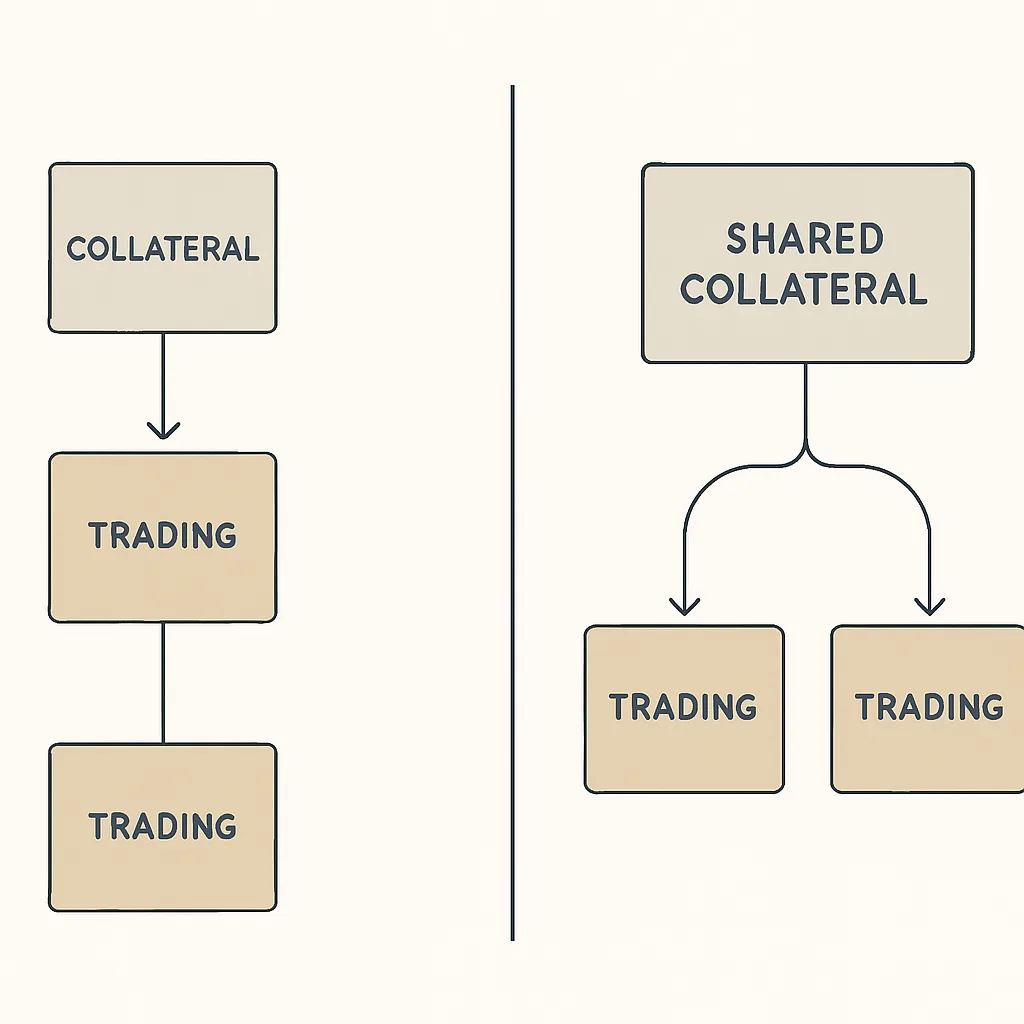
When trading leveraged crypto derivatives, margin is collateral that supports a position. Many platforms offer two margin modes: isolated and cross. The difference is not simply how much leverage you can use; it is how collateral is allocated and which funds may be exposed if a position moves against you.
Margin modes do not prevent losses. Leverage can make losses build quickly, and liquidation rules differ by platform and contract. Before trading, check the platform’s current rules, including how it calculates margin, liquidation, and any fees.
What is isolated margin?
With isolated margin, a specific amount of collateral is assigned to an individual position. Other available balance in your account is generally kept separate from that position’s margin. If the position is liquidated, the loss is typically limited to its assigned margin, subject to platform rules, fees, and any additional margin you choose to add.
For example, imagine assigning 100 USDT as margin to a leveraged position. Under isolated margin, that position’s collateral is distinct from the rest of your account balance. A sharp adverse move could put the assigned collateral at risk, but it would not normally draw on unrelated funds unless you add margin or the platform’s rules say otherwise.
Isolated margin can make the amount allocated to a position easier to identify. However, it does not cap the position’s risk at a comfortable level automatically. A highly leveraged position may still be liquidated after a relatively small adverse price move.
What is cross margin?
With cross margin, eligible account balance may be shared across multiple open positions to support them. If one position loses value, available collateral elsewhere in the account may help it remain open, depending on the platform’s risk system and the positions involved.
This shared pool can give positions more room before liquidation, but it can also expose more of your eligible balance. If losses grow across positions, a larger portion of the account may be at risk. Cross margin does not guarantee that a position will avoid liquidation or that every asset in your account will be used as collateral.
Key differences at a glance
- Collateral allocation: Isolated assigns collateral to a particular position; cross can share eligible collateral across positions.
- Exposure: Isolated generally confines risk to the position’s assigned margin, while cross can put more of the available account balance at risk.
- Liquidation behavior: Isolated positions are assessed using their allocated margin; cross positions may be supported by shared collateral. Exact calculations vary by platform.
- Monitoring: Cross margin may require watching the combined account and all supported positions, not just one trade.
Which mode should a beginner consider?
Isolated margin may be easier to understand when you want to define a specific collateral amount for one position and keep it separate from other funds. It can help make the potential collateral at risk more visible, though it does not replace sensible position sizing or a plan for adverse price moves.
Cross margin may suit traders who understand how shared collateral and portfolio-level risk work. It can be useful when positions are managed together, but a losing trade may affect the funds available to support other positions. Beginners should avoid treating a larger liquidation buffer as protection from loss.
Neither mode is universally safer. The right choice depends on your strategy, account setup, and ability to monitor risk. If you are learning, consider practicing in a demo environment first and avoid using money you cannot afford to lose.
Before opening a position
- Confirm which margin mode the platform has selected; do not assume it is the same for every market or position.
- Read how the platform defines available collateral, maintenance margin, and liquidation price.
- Check whether changing margin mode affects existing positions or orders.
- Decide in advance how much of your account you are willing to risk, and account for trading fees and possible funding payments.
- Use leverage cautiously. Higher leverage leaves less room for an adverse move before liquidation risk rises.
Remember: Isolated margin separates collateral by position, while cross margin can share eligible collateral across positions. Both can lead to liquidation and loss. Understand the platform’s rules and your maximum exposure before trading.