
Yield Products or Active Trading: How to Choose Your Approach
Compare crypto earn products with active trading by looking at effort, risk, liquidity, and goals—and learn when neither option may fit.
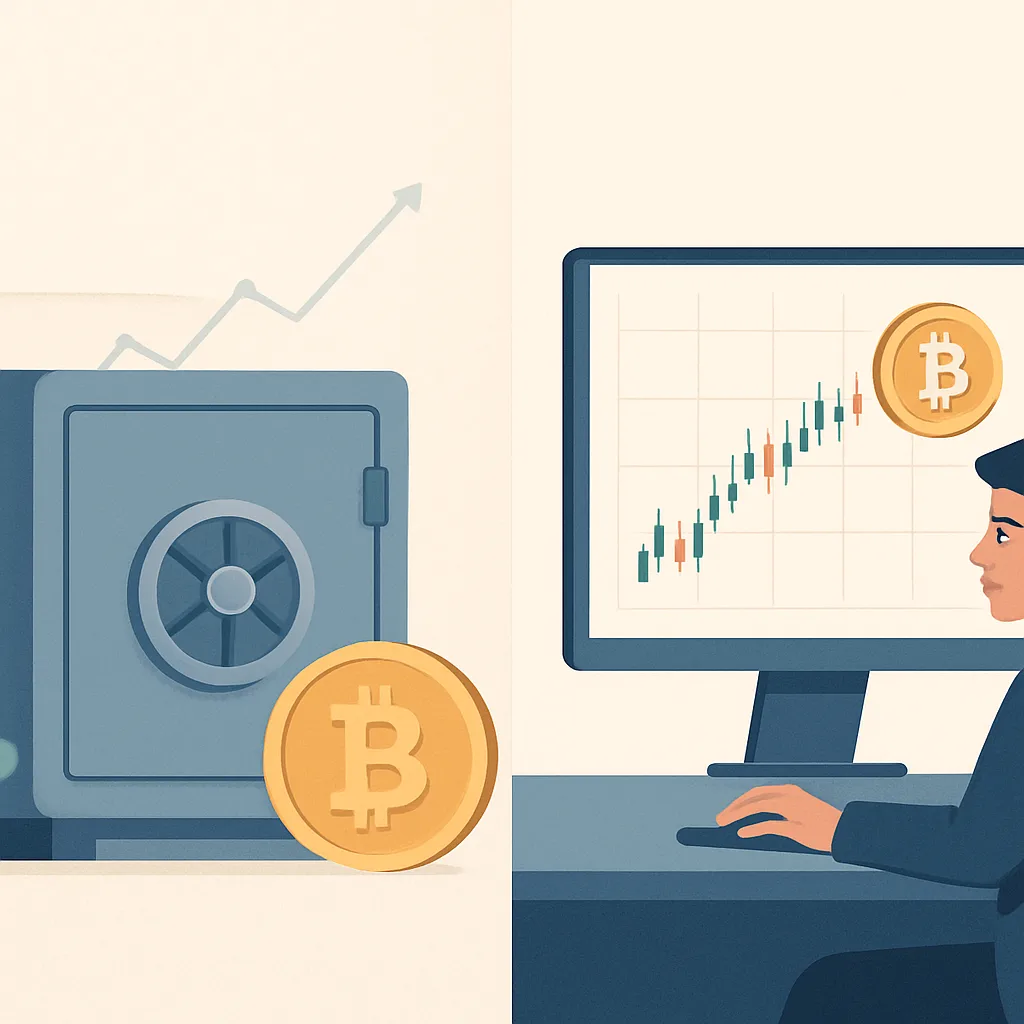
Crypto platforms may offer two broad ways to put assets to work: earn products that may pay yield over time, and active trading, where you make decisions to profit from price movements. They serve different purposes and carry different risks. Neither guarantees a return, and choosing between them starts with understanding how each works.
What are yield or earn products?
Earn products generally let you deposit or allocate crypto under stated terms in exchange for potential rewards. Depending on the product, assets may be locked for a period, lent to borrowers, used in staking, or otherwise deployed. Rates, payout schedules, access to funds, and risks vary. A displayed rate is not a guaranteed future return unless the product terms explicitly say so—and even then, review who backs that promise and what conditions apply.
Check whether the rate is fixed or variable, whether rewards are paid in the deposited asset or another token, and whether early withdrawal is possible. Understand custody, counterparty, protocol, and smart-contract risks where relevant. A high advertised rate can reflect higher risk, changing incentives, or restrictions on access.
What is active trading?
Active trading means buying and selling assets in response to a plan, market view, or signal. Traders may use spot markets or derivatives, and may hold positions for minutes, days, or longer. Potential outcomes depend on price movements, execution, fees, and discipline. Trading can produce losses quickly; leverage can magnify both gains and losses and may lead to liquidation.
Trading also takes ongoing attention. You need to decide when to enter and exit, manage position size, account for fees and spreads, and respond to changing conditions. A sound plan cannot remove market risk, but it can help limit avoidable mistakes.
Compare the trade-offs
- Time and effort: Earn products may require less day-to-day decision-making, while active trading usually demands monitoring and repeated choices.
- Liquidity: Trading assets may be accessible when markets are open, though volatility or low liquidity can affect execution. Earn products may impose lockups, notice periods, or withdrawal limits.
- Return uncertainty: Earn rates can change and principal may be at risk. Trading results are uncertain and can be negative after fees and losses.
- Risks: Earn products can involve platform, borrower, validator, protocol, or smart-contract risks. Trading involves market and execution risk, with additional liquidation risk when using leverage.
- Control: Traders choose when and how to act, but must manage decisions and risk. Earn-product users have fewer market-timing decisions but depend on product rules and providers.
When might each approach fit?
An earn product may be worth researching if you already hold an asset, do not need immediate access to it, and understand the product’s terms and risks. It is not a substitute for an emergency reserve: funds you may need soon generally should not be placed behind withdrawal restrictions or exposed to risks you cannot afford.
Active trading may fit someone who has time to learn, a clear strategy, and a defined amount they can afford to lose. Consider starting with paper trading or very small spot positions. Set risk limits before entering, and avoid borrowing or using leverage until you understand how losses and liquidation work.
Some people use both approaches for different portions of their assets, but dividing funds does not eliminate risk. Keep essential savings separate, avoid concentrating assets in one platform or product, and do not choose based only on a headline yield or recent price movement.
A practical decision checklist
- Define the purpose of the funds and when you may need them.
- Read the product terms, including withdrawal rules, fees, and how rewards are generated.
- Identify who holds or controls the assets and what could happen if a provider or protocol fails.
- For trading, write down your entry, exit, position size, and maximum acceptable loss before placing an order.
- Compare likely costs and risks—not just the advertised rate or potential upside.
Bottom line: Earn products may offer a more hands-off way to seek rewards, while active trading offers more direct control and requires more time and risk management. Choose based on liquidity needs, experience, and capacity for loss—not promises of easy income. Crypto products and markets can change quickly, so verify current terms and never invest money you cannot afford to lose.