
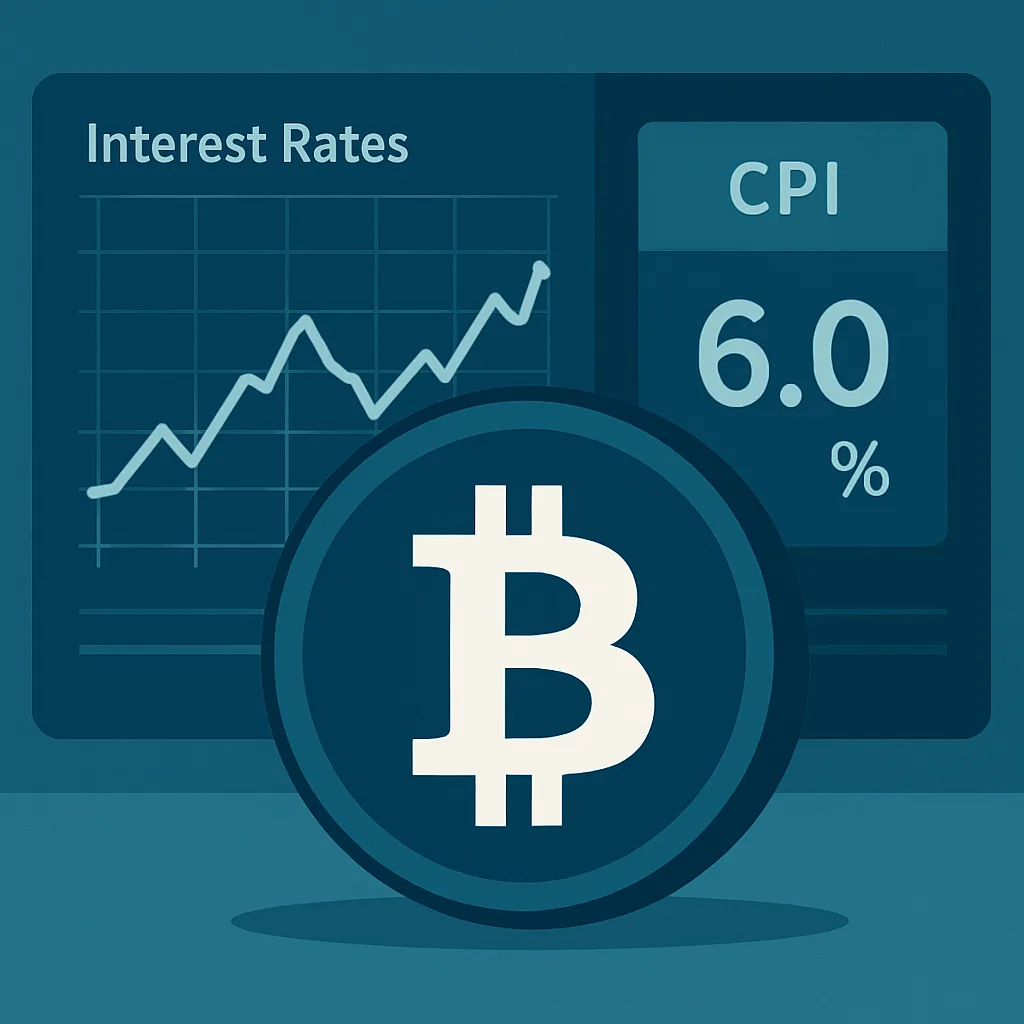
When Rates and CPI Shift, Crypto Reprices Fast
Interest-rate decisions and inflation reports can reshape crypto sentiment in minutes. Learn why these macro releases matter, how markets may react, and what traders can monitor without treating any outcome as certain.
Crypto markets may operate around the clock, but they do not operate in isolation. Interest-rate decisions, inflation readings, and central-bank guidance can alter expectations for borrowing costs and liquidity—conditions that often influence demand for riskier assets, including Bitcoin and other cryptocurrencies.
Why macro data matters to crypto
When inflation remains persistent, central banks may keep rates elevated or signal fewer cuts than markets expected. Higher rates can make cash and short-term government securities more appealing relative to volatile assets, while tighter financial conditions may limit the liquidity available for speculative positions. If inflation cools or policymakers signal an easier path, risk appetite can improve, though the response is never guaranteed.
Crypto can react strongly because prices reflect expectations as well as current conditions. Traders may position ahead of a release, so an apparently positive number can still prompt selling if it falls short of forecasts. Conversely, a difficult headline may have limited impact if markets had already priced in worse news.
How rate decisions and CPI releases move prices
Before a major announcement, traders often watch consensus forecasts, bond yields, currency movements, and derivatives positioning. The first price move after publication can be sharp, but it may reverse as participants interpret details, adjust leverage, or respond to the central bank’s accompanying commentary.
For a rate decision, the expected change is only part of the story. The statement, projected rate path, and press conference can indicate whether policymakers see inflation risks as persistent or easing. For a CPI report, the overall figure and underlying measures may point in different directions. Markets may focus on whether the data changes the likely timing of future policy decisions.
Reading the reaction without overinterpreting it
There is no fixed rule that falling inflation sends crypto higher or that a rate increase automatically pushes it lower. A release can move Bitcoin differently from equities, or affect major tokens and smaller assets unevenly. Other forces—such as exchange flows, liquidations, regulation, and network-specific developments—can dominate the macro backdrop.
Consider the sequence rather than a single candle: how prices move before the release, whether the initial reaction holds, and how related markets respond. A rapid rally or drop may reflect thin liquidity or crowded positioning rather than a durable change in the outlook. Headlines should be treated as context, not as a complete trading signal.
A practical plan for event-driven volatility
Check the economic calendar and identify releases that could affect your market view. Decide in advance how much risk you are willing to take, and consider reducing position size when uncertainty is unusually high. Avoid relying on leverage to amplify a prediction: sudden moves can trigger liquidations before a thesis has time to play out.
Use limit orders or other execution controls where appropriate, and remember that stop orders may fill at a different price during fast markets. If you are investing for the long term, separate that plan from short-term reactions to each data point. No macro report can reliably predict the next crypto price move, so risk limits and a clear time horizon matter more than certainty.
Rates and CPI are important because they can change the market’s assumptions about liquidity and risk appetite. Understanding those assumptions can help traders interpret volatility, but disciplined position sizing and independent research remain essential.