
How Futures Liquidation Happens and What Traders Can Do
Learn why leveraged futures positions are liquidated, how margin and mark price affect the process, and which risk controls may help reduce the chance of forced closure.
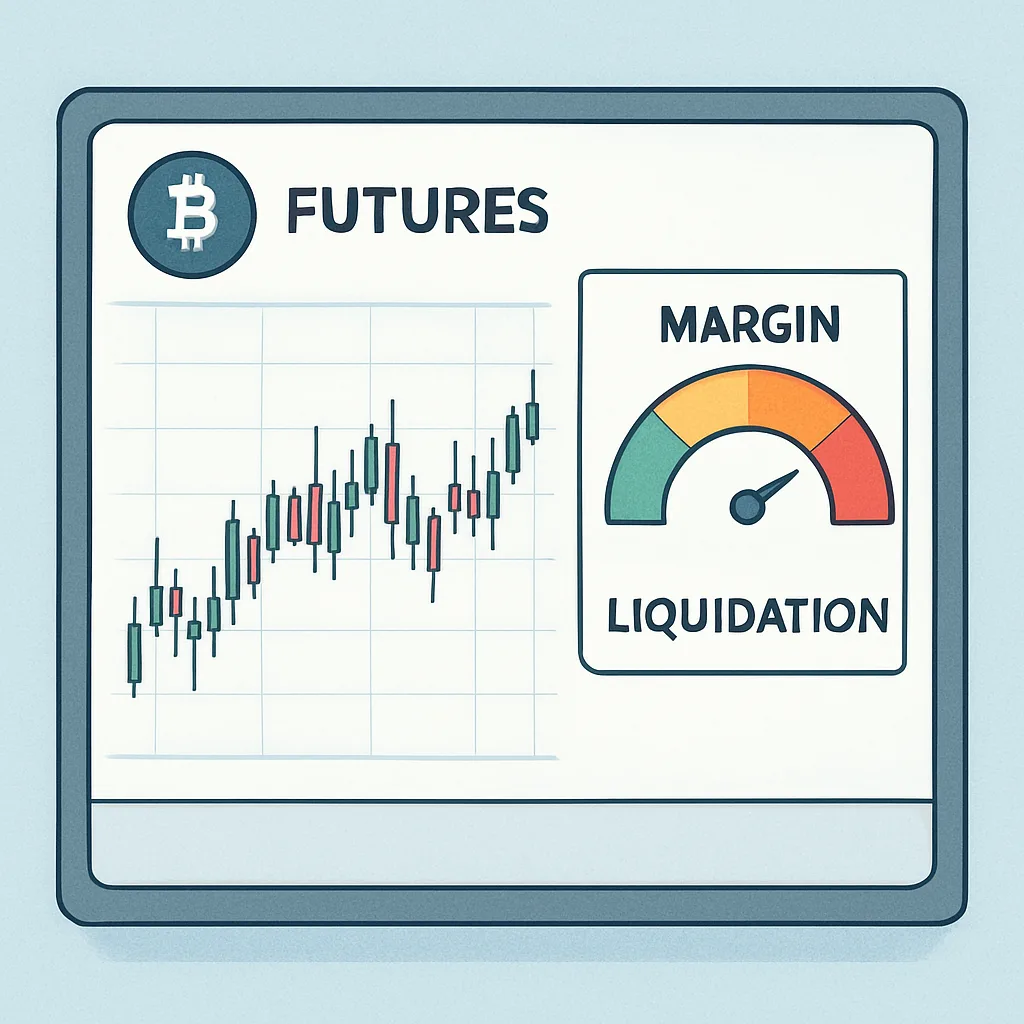
In leveraged futures trading, liquidation is the forced closure of a position when the account no longer has enough margin to support it. It is designed to limit further losses when a trader’s collateral approaches the exchange’s maintenance-margin requirement. Liquidation can happen quickly in volatile markets, so understanding the mechanics matters before opening a leveraged position.
How leverage affects liquidation risk
Leverage lets a trader control a position larger than the margin they commit. For example, with 10× leverage, 100 units of margin can support a position worth about 1,000 units, before fees and other requirements. This increases both potential gains and potential losses relative to the margin. A relatively small adverse price move can therefore consume a substantial share of the collateral.
Leverage does not change the market’s price movement; it magnifies its effect on the trader’s margin. Higher leverage generally leaves less room for the price to move against the position before liquidation becomes possible.
Initial margin and maintenance margin
Initial margin is the collateral required to open a position. Maintenance margin is the minimum amount of equity that must remain to keep it open. If the position’s losses reduce account equity to the applicable maintenance requirement, the exchange may begin liquidation.
The exact calculation depends on the platform, contract, position size, fee schedule, and margin mode. Many venues use risk tiers: larger positions can require a higher maintenance margin. Always check the exchange’s current contract specifications rather than assuming one universal liquidation formula.
What triggers the process
Liquidation is commonly assessed using a mark price, which is designed to reflect a fair market value and reduce the effect of a brief, isolated trade-price spike. The mark price and liquidation rules vary by exchange. If the relevant price reaches the position’s liquidation threshold and margin is insufficient, the platform may close some or all of the position.
Depending on the exchange and contract, liquidation may involve a liquidation fee, partial position reduction, or other risk-management steps. The final outcome can differ from the displayed estimated liquidation price, especially during fast markets, when fees, funding, slippage, and changing margin requirements may matter.
Isolated and cross margin
With isolated margin, collateral is assigned to a specific position. Losses are generally limited to the margin allocated to that position, though platform rules and fees still apply. With cross margin, eligible account collateral may support multiple positions. This can provide more room for one position, but losses in one trade can put more of the account’s available balance at risk.
Neither mode prevents liquidation. The choice changes how collateral is shared and which funds may be exposed. Review the platform’s rules and consider how the setting fits your risk limits.
Ways to manage liquidation risk
- Use less leverage: Lower leverage can provide more room for adverse price movement, although it cannot remove market risk.
- Size positions carefully: Decide how much you can afford to lose before entering, and account for fees and possible slippage.
- Keep margin in view: Monitor account equity, maintenance requirements, and any positions that share cross margin.
- Consider a stop-loss: A stop order may close a position before its liquidation threshold, but execution is not guaranteed at the trigger price, particularly during sharp moves or thin liquidity.
- Understand funding and fees: Ongoing costs can affect account equity and the price at which a position becomes vulnerable.
- Know the contract rules: Check the mark-price method, risk tiers, liquidation process, and whether partial liquidation is used.
Liquidation is not the same as a stop-loss
A stop-loss is an order or trigger a trader sets to attempt an earlier exit. Liquidation is an exchange risk-control action that may occur after margin falls below required levels. A stop-loss can help define an exit plan, but gaps, latency, price volatility, and liquidity conditions mean it cannot guarantee a specific result.
Leveraged futures can lead to rapid losses, including the loss of the collateral assigned to a position. Liquidation rules differ across platforms and products. Learn the mechanics with the exchange’s current documentation, use only risk capital, and do not treat leverage as a way to make an uncertain trade safer.