
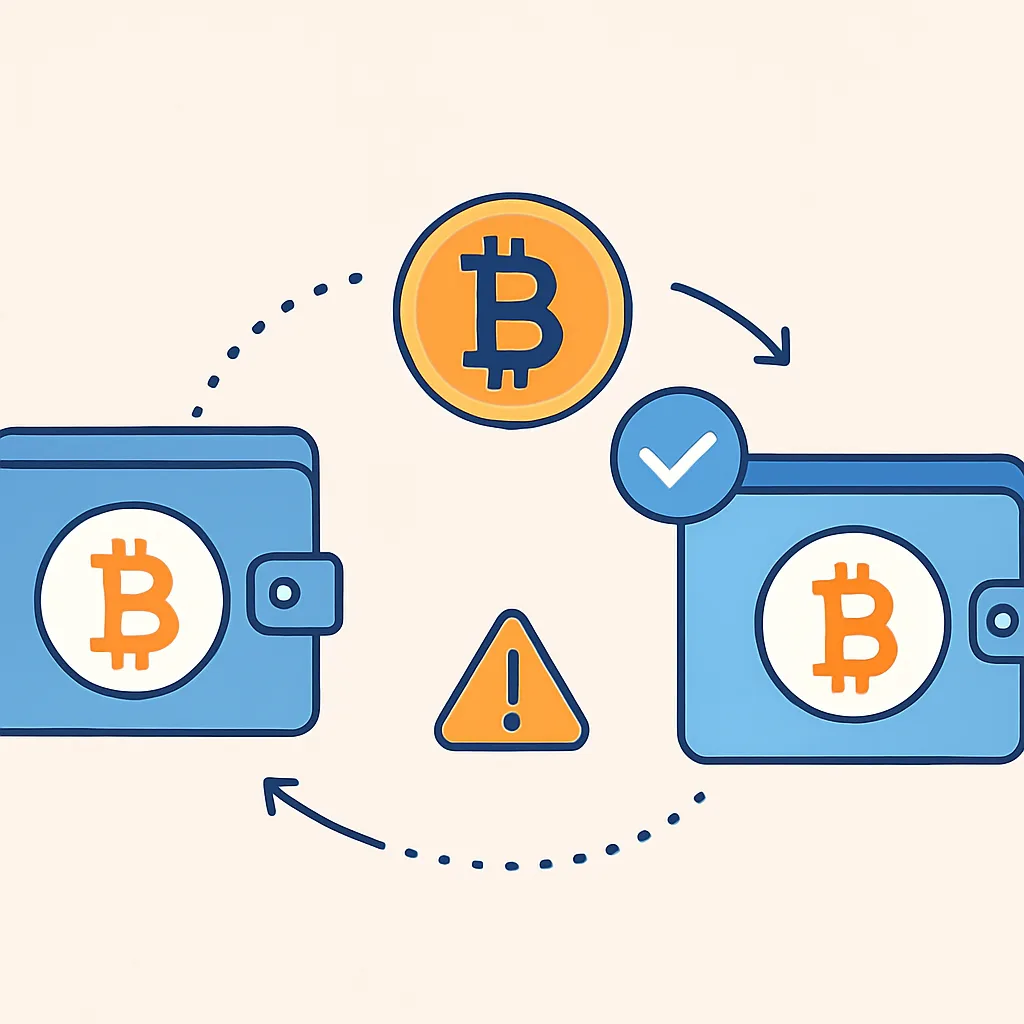
How to Choose a Transfer Network Without Losing Funds
Learn how deposits, withdrawals, network compatibility, fees, and test transfers fit together to reduce the risk of sending crypto incorrectly.
Depositing crypto means sending assets to a platform or wallet you control. Withdrawing means sending assets out to another address. Both actions rely on a blockchain network, and choosing the wrong network or entering incorrect details can delay a transfer or make funds unrecoverable.
Why network selection matters
The same asset may be available on several networks. For example, a token might exist on Ethereum and on one or more other blockchains. These versions are not automatically interchangeable at every destination. The sending network must be supported by the receiving wallet or platform for that specific asset.
Do not choose a network based only on its name, speed, or fee. Check the deposit or withdrawal instructions at both ends. If the receiving service does not support the selected network, the transfer may not arrive as expected. Recovery, when possible, may require extra time, fees, and support assistance.
Before making a deposit
- Open the receiving service’s deposit page. Select the exact asset and review the supported network options.
- Confirm the network at the sending end. Choose the same network shown in the receiving instructions.
- Copy the deposit address from the receiving service. Avoid relying on an old address or one copied from an unrelated transaction.
- Check additional requirements. Some assets and platforms require a memo, tag, payment ID, or other identifier in addition to the address.
- Review minimums and confirmations. A deposit below the stated minimum may not be credited, and the platform may wait for a specific number of blockchain confirmations.
Before making a withdrawal
At the destination, confirm that the wallet or platform accepts the asset on the network you plan to use. Copy the destination address and any required memo or tag from its official interface. Then check the withdrawal form carefully before confirming.
Review the network, address, asset, amount, fee, and estimated amount received. Some services deduct the fee from the withdrawal amount, while others display it separately. Make sure the final amount meets any destination minimum.
Use a test transfer when appropriate
For a new destination, a small test transfer can help confirm that the address and network work as expected. First check the platform’s minimum withdrawal, network fee, and any deposit minimum; a test that is too small may not be credited. Wait for the test to arrive before sending a larger amount. A test reduces uncertainty but does not replace verifying every detail.
Final safety checks
- Use the official app or website and check the destination carefully.
- Compare the first and last characters of the address after pasting it.
- Be alert to clipboard malware that can replace a copied address.
- Do not assume similar-looking network names mean the networks are compatible.
- Never share your password, private key, or recovery phrase to complete a transfer.
- Keep the transaction ID so you can track the transfer or contact support.
Blockchain transfers are generally irreversible once confirmed. If a transfer is delayed, check its status using the transaction ID and the platform’s instructions before attempting to send again. Careful network selection, complete destination details, and a suitable test transfer can help you avoid preventable mistakes.