
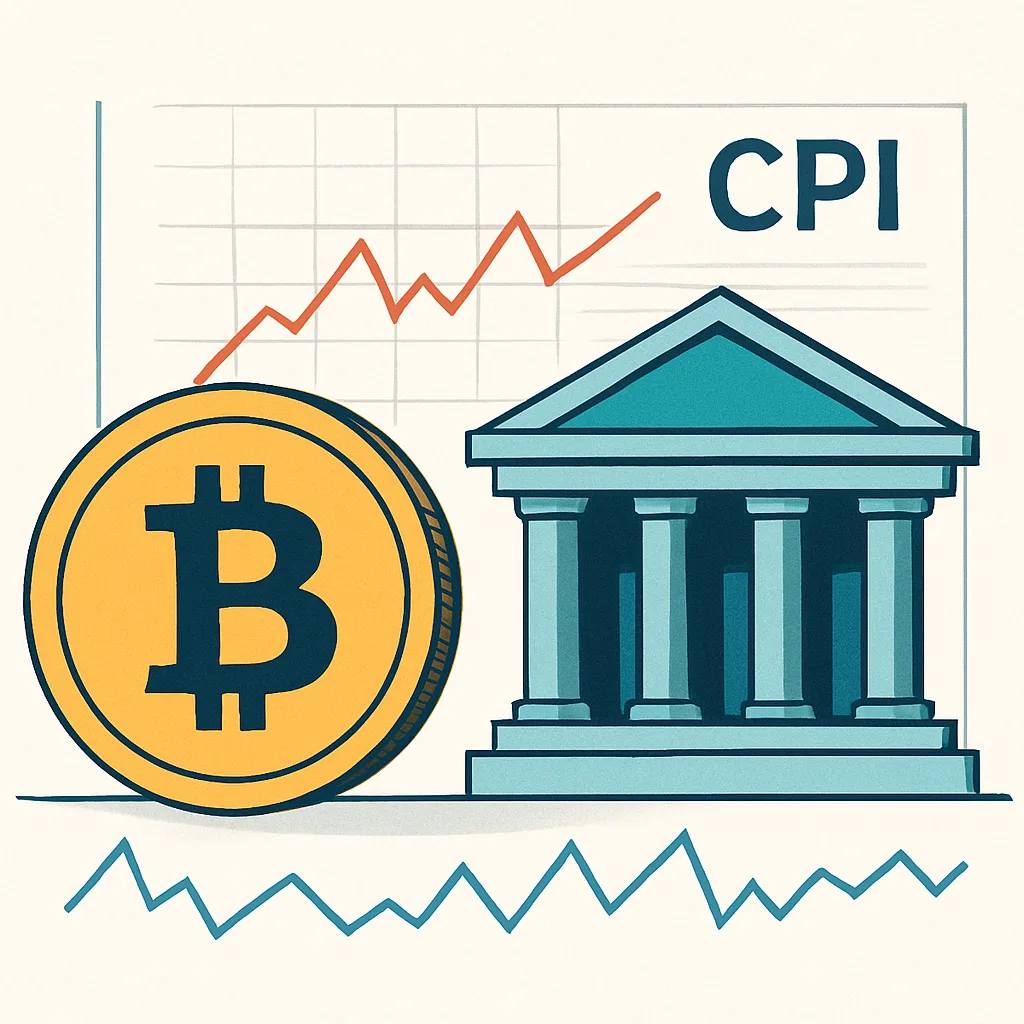
Rates, CPI, and Crypto: Follow the Market’s Reaction in Three Stages
Interest-rate decisions and inflation reports can shift crypto sentiment through changing expectations, liquidity, and risk appetite. Learn how to read the reaction without assuming every headline has the same effect.
When central banks announce rate decisions or governments publish inflation figures, crypto markets may respond within minutes. Bitcoin and other digital assets trade around the clock, so price action can unfold before traditional markets open. But the headline number alone rarely explains the move: traders also weigh expectations, policy signals, and broader market conditions.
1. Compare the release with expectations
Markets often react less to whether inflation is high or low in isolation than to how the result compares with forecasts. If CPI comes in below expectations, traders may anticipate slower rate increases or earlier cuts. That can support risk appetite. A hotter-than-expected reading may strengthen expectations for tighter policy, putting pressure on assets that tend to benefit from abundant liquidity.
The same principle applies to rate decisions. A widely expected hike may already be reflected in prices, while unchanged rates can still unsettle markets if policymakers signal that borrowing costs will stay high for longer. Watch the gap between the result and the consensus, not just the result itself.
2. Read the policy message and market transmission
After a release, investors look for clues about what could come next. Central-bank statements, press conferences, and inflation details can change expectations for future rates. Those shifts can influence bond yields, the U.S. dollar, and financial conditions—factors that may affect demand for higher-risk investments, including crypto.
This is a transmission chain, not a guaranteed formula. A softer CPI print does not automatically mean Bitcoin will rise. Crypto can face its own pressures, such as leverage liquidations, regulatory developments, changes in fund flows, or weakening network and market sentiment. Macro data is one input among many.
3. Separate the initial move from confirmation
Price can jump sharply on a headline and then reverse as traders digest the details. Look at whether the move holds after the first burst of volatility, whether trading activity supports it, and whether related markets are moving in the same direction. A quick wick in either direction is not, by itself, proof of a durable trend.
Before a major release, consider reducing position size, setting clear invalidation levels, and avoiding excessive leverage. If the market is unusually thin or spreads widen, a stop order may execute at a different price than expected. A plan made in advance can help prevent a fast reaction from turning into an impulsive trade.
A practical checklist for macro days
- Note the expected rate decision or CPI reading and the range of forecasts.
- Check the actual result, revisions, and relevant details—not only the headline figure.
- Listen for changes in policymakers’ outlook and compare them with prior guidance.
- Observe whether crypto’s move persists and whether broader markets confirm it.
- Manage exposure for volatility; no macro outcome guarantees a particular crypto price.
Rates and inflation reports can reshape the backdrop for crypto, but reactions depend on what was already priced in and how investors interpret the outlook. Treat each release as new information, combine it with market structure and risk controls, and avoid confusing a headline-driven spike with certainty about what comes next.