
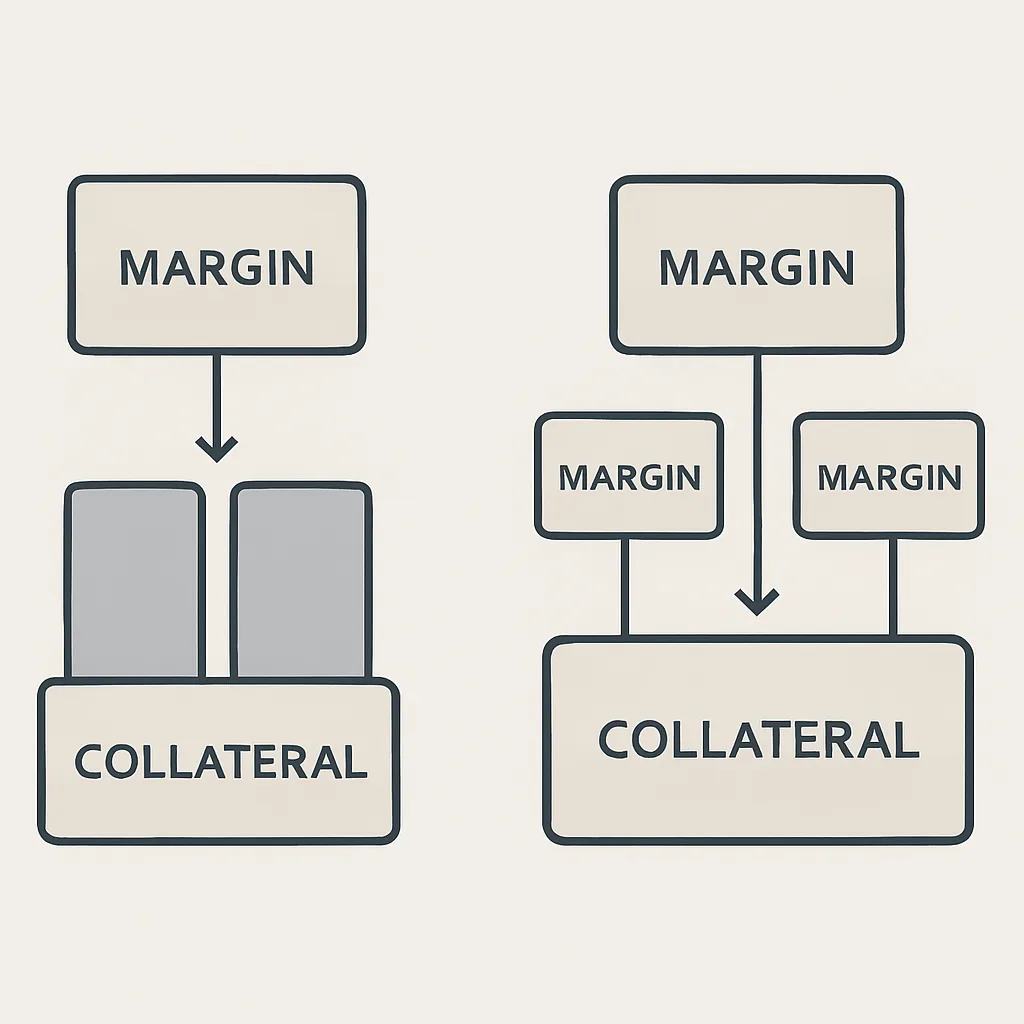
How Isolated and Cross Margin Change Futures Risk
Learn how isolated and cross margin allocate collateral, how each mode can affect liquidation risk, and what beginners should check before opening a futures position.
When trading leveraged futures, margin is collateral used to support an open position. Many exchanges offer two margin modes: isolated and cross. The difference is how collateral is assigned and what funds may be exposed if a position loses value. Neither mode removes the risks of leverage.
What is isolated margin?
With isolated margin, a specific amount of collateral is assigned to one position. If that position moves against you, its losses are generally limited to the margin assigned to it, subject to the exchange’s rules, fees, and liquidation process. You may be able to add or remove margin, but the details depend on the platform.
Example: You open a futures position and assign 100 USDT as isolated margin. If the position approaches liquidation, the exchange may close it according to its maintenance-margin requirements. Other funds in your account are generally not automatically allocated to support that position. This is an illustration, not a guarantee that your loss will be exactly 100 USDT; fees, funding, and platform rules can affect the outcome.
What is cross margin?
With cross margin, eligible account balance may be shared across positions to help meet margin requirements. If one position loses value, available collateral elsewhere in the account may help keep it open. This can delay liquidation compared with using only a small isolated allocation, but it can also put more of your eligible balance at risk.
Example: If a cross-margin account has several open positions, a loss on one may draw on shared available collateral. If losses grow across positions, the account’s balance can be depleted and multiple positions may be liquidated. The exact treatment of balances and positions varies by exchange and account setup.
Key differences at a glance
- Collateral: Isolated assigns margin to an individual position; cross may share eligible collateral across positions.
- Exposure: Isolated can help ring-fence funds outside that position. Cross can expose more of the account balance to losses.
- Liquidation behavior: Cross collateral may provide more room before liquidation, but it does not prevent liquidation. Isolated positions can be liquidated sooner when their assigned margin is insufficient.
- Monitoring: Cross margin requires attention to overall account equity and combined positions. Isolated margin requires close monitoring of each position’s margin and liquidation level.
Which mode should a beginner consider?
Isolated margin may be easier to understand while learning because it makes the collateral assigned to a position more explicit. It does not make a trade safe: leverage can still cause rapid losses, and liquidation may occur. Cross margin may suit traders who understand how shared collateral works and actively manage the whole account, but it can increase the amount exposed to a losing position.
Choose based on your risk plan, not on the idea that one mode guarantees better results. Before trading, check the exchange’s definitions, eligible collateral rules, maintenance-margin tiers, liquidation fees, and whether margin mode can be changed with positions open.
Beginner safety checklist
- Understand how much collateral the exchange can use for the selected mode.
- Use low or no leverage while learning; leverage magnifies both gains and losses.
- Decide in advance how much you can afford to lose, and avoid risking essential funds.
- Review liquidation estimates, fees, funding payments, and account equity before opening a position.
- Consider practicing in a demo environment before placing a live leveraged trade.
Margin mode changes how collateral supports futures positions; it does not change the market risk or guarantee a particular liquidation outcome. Read the platform’s current rules and understand the possible loss before trading.