
What Triggers a Futures Liquidation and Why It Matters
Learn how leverage, margin, and unrealized losses can lead to forced position closure in crypto futures—and why the liquidation price is only an estimate.
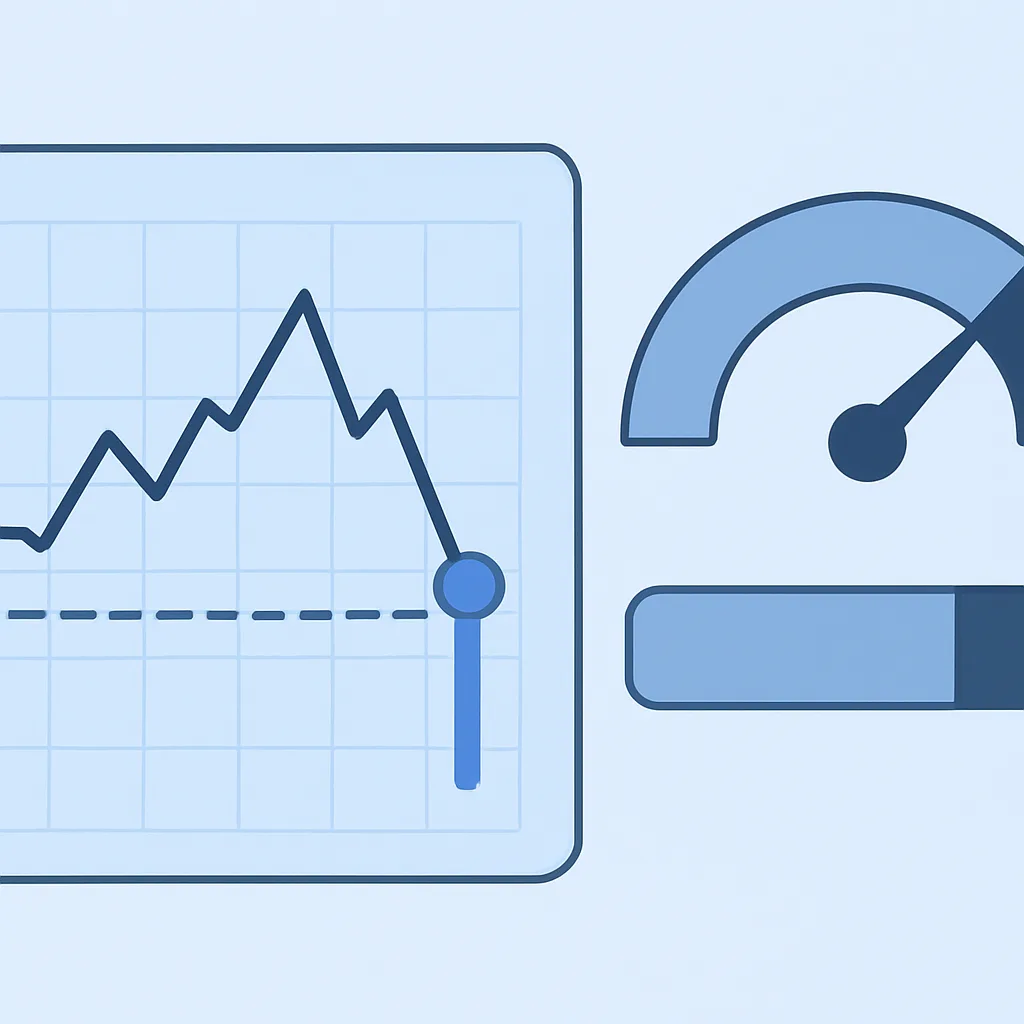
In leveraged futures trading, liquidation is the forced closure of a position when its margin is no longer sufficient to meet the exchange’s requirements. It is designed to limit the risk that losses grow beyond the collateral supporting the trade. Liquidation can happen quickly during sharp price moves, so understanding the process is essential before using leverage.
How leverage increases liquidation risk
Leverage lets a trader control a larger position with a smaller amount of margin. For example, with 10× leverage, 100 USDT of initial margin can support a position worth about 1,000 USDT, subject to the platform’s rules and fees. This magnifies potential gains, but it also magnifies the effect of adverse price movements on the margin.
As a simplified illustration, a 1% move against a 10× leveraged position represents roughly a 10% loss relative to the initial margin, before fees and other adjustments. The actual liquidation point depends on factors including maintenance margin, position size, funding payments, fees, and the exchange’s calculation method.
What happens when a position is liquidated?
When the account’s margin falls below the required maintenance level, the exchange may begin liquidating some or all of the position. The position is closed according to the platform’s liquidation process, and the trader may lose some or all of the margin allocated to it. The exact outcome varies by venue, contract, and account settings.
Liquidation is not the same as a stop-loss. A stop-loss is an order a trader chooses to place at a specified trigger, while liquidation is a risk-control action taken by the exchange when margin requirements are breached. A stop order may not execute at its trigger price during fast or illiquid markets, but relying on liquidation as a substitute for a planned exit can leave little control over the outcome.
What is the liquidation price?
The liquidation price is an estimated market price at which a position would reach the platform’s liquidation conditions, assuming other relevant factors stay unchanged. It is not a guaranteed exit price. Fees, funding, changes in margin, additional positions, and market conditions can shift the estimate or affect the final execution.
Mark price may be used to determine whether a position has reached its liquidation threshold, even if the last traded price differs. Check the contract details and platform documentation to learn which price reference applies and how the exchange handles liquidation.
What can affect liquidation risk?
- Leverage: Higher leverage generally leaves less room for an adverse move before margin approaches the maintenance requirement.
- Position size: A larger position can require more maintenance margin and may increase the impact of price changes.
- Margin mode: Depending on the platform, isolated margin limits the margin assigned to a position, while cross margin may draw on eligible account balance. Each has different risks; neither removes the possibility of liquidation.
- Fees and funding: Trading costs and periodic funding payments can reduce available margin over time.
- Volatility and liquidity: Rapid price changes or thin liquidity can make it harder to close a position near an expected price.
Ways to manage the risk
Before opening a futures position, understand the contract’s margin rules, liquidation process, and price reference. Use leverage cautiously, size the position so a loss is manageable, and consider whether your margin setting matches your risk plan. Monitor funding and available margin, and define an exit plan before entering the trade. Stop orders can help implement that plan, but they cannot guarantee a specific execution price.
Do not add funds or increase a position automatically just to move the liquidation price farther away. Reassess the trade and the amount you can afford to lose. Futures are high risk, and liquidation can result in substantial losses, including the loss of the margin allocated to a position. This lesson is educational and is not financial advice.