
How to Size Crypto Positions Before You Place a Trade
A repeatable position-sizing method can help keep one crypto trade from putting too much of your account at risk.
Position sizing is the decision that turns a trading idea into a defined amount of market exposure. On a crypto exchange, where prices can move quickly and leverage can magnify losses, choosing a position size before entering can help keep risk consistent across trades.
Start with the amount you can afford to lose
First decide how much of your account you are willing to lose if the trade reaches its exit level. Some traders use a small fixed percentage of account equity as a planning limit; the appropriate amount depends on personal circumstances and is not a guarantee against losses. Avoid using funds needed for living expenses, and remember that several open positions can create overlapping exposure.
Calculate size from the stop distance
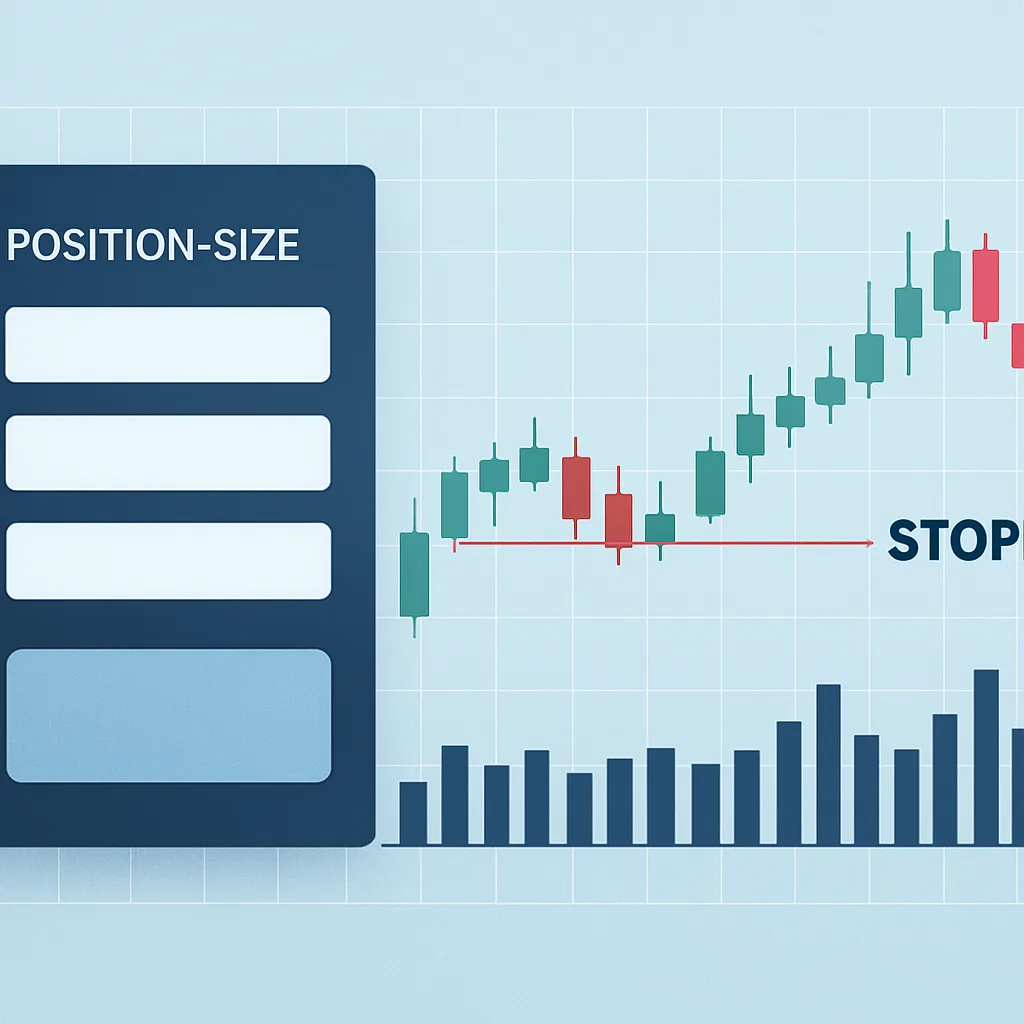
A basic formula is: position size = planned dollar risk ÷ distance from entry to stop. For example, if you set a planned loss of $20 and your stop is 4% below entry, the position’s notional value would be about $500 before fees and slippage. If the stop is 2% away, the same planned risk implies a notional value of about $1,000. This calculation assumes the stop executes near its trigger; fast markets can produce a worse fill.
Account for fees, funding, and execution
Trading fees, spread, slippage, and—on perpetual futures—funding payments can affect the final result. Include these costs when estimating risk, particularly for frequent trades or less liquid pairs. A stop order may not guarantee an execution price, and a market gap or rapid price move can lead to a larger loss than planned.
Leverage changes exposure, not the underlying risk
Leverage lets a trader control a larger position with less collateral, but it does not make a trade safer. It can bring liquidation closer and increase the impact of small price moves. Calculate risk using the position’s full exposure and understand the exchange’s margin and liquidation rules before opening a leveraged trade. Do not treat available leverage as a recommended position size.
Check total portfolio exposure
Several positions may depend on the same market driver. For example, multiple altcoin trades can all be affected by a sharp Bitcoin move. Review the combined risk across open orders and positions, and consider whether a cluster of correlated trades could exceed your intended account-level limit.
Use a consistent pre-trade checklist
- Set an entry idea and an exit level before placing the order.
- Choose a maximum planned loss in account currency.
- Calculate the position size from the stop distance.
- Include fees, slippage, funding, and possible gaps in your review.
- Check leverage, liquidation terms, and risk across all open positions.
Position sizing cannot remove market risk or ensure a profitable outcome. It provides a structured way to decide how much exposure to take—and when a trade does not fit your risk limits, passing on it is a valid choice.