
How Bid-Ask Spreads Behave on Thin Altcoin Pairs
Learn why thin altcoin pairs can have wide, shifting spreads, how to read the best bid and ask, and what to check before placing an order.
On a thin altcoin pair, the price shown on a chart may not be the price you can actually trade at. The gap between the highest displayed buy offer and the lowest displayed sell offer can be wide, unstable, or misleading. Understanding that gap helps you estimate execution costs and avoid assuming that a quoted price guarantees a fill.
What the bid-ask spread measures
The bid is the highest price a buyer is currently offering. The ask is the lowest price a seller is currently requesting. The spread is the difference between them: ask − bid. For example, if the best bid is 0.0048 USDT and the best ask is 0.0052 USDT, the spread is 0.0004 USDT.
Because coin prices vary greatly, it can help to express the spread as a percentage. One common estimate divides the spread by the midpoint, which is the average of the best bid and best ask: spread percentage = (ask − bid) ÷ midpoint × 100. In this example, the midpoint is 0.0050 USDT and the spread is about 8%. This is an estimate of the quoted gap, not a guarantee of your final trading cost.
Why thin pairs often have wider spreads
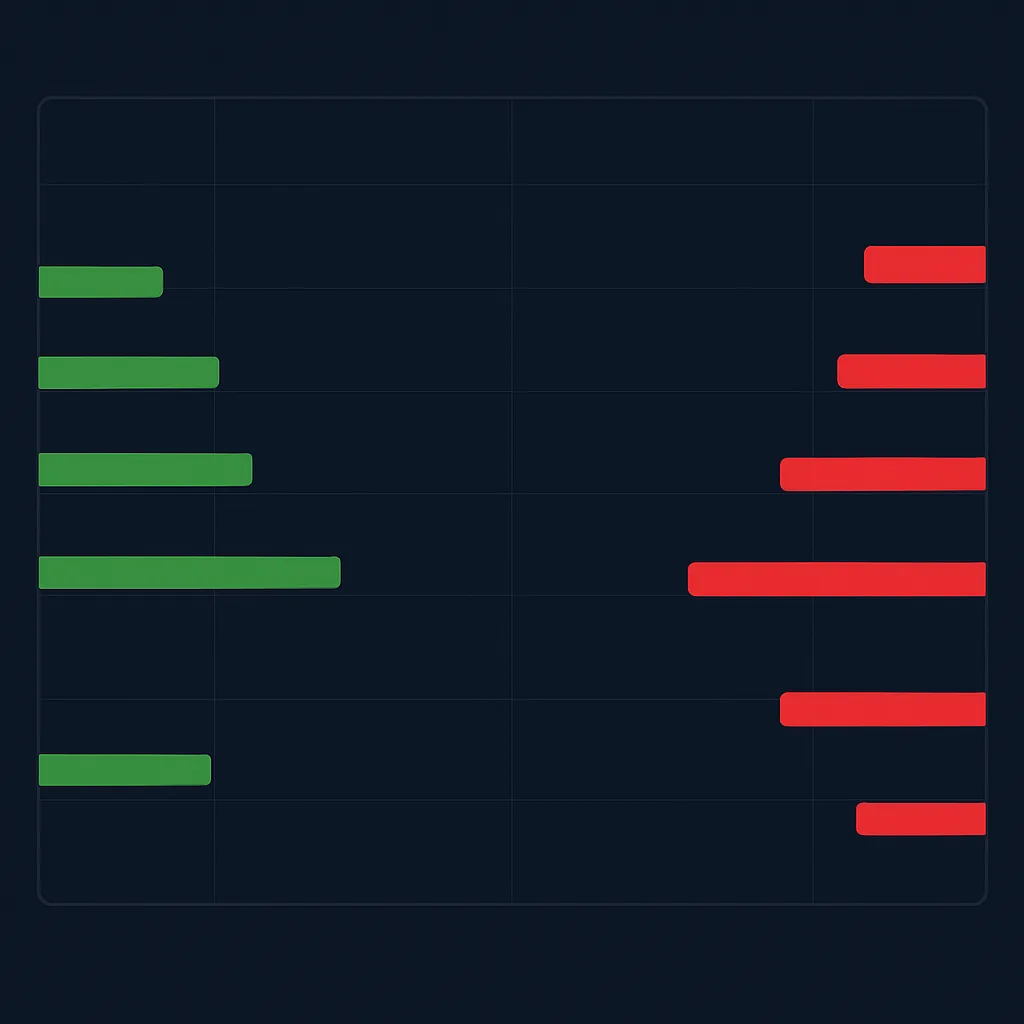
A pair is thin when trading activity and available orders are limited. Fewer buyers and sellers may mean the best bid and ask sit far apart. A small market order can also consume the available quantity at the best price and then match with less favorable prices deeper in the book. This price movement across available orders is called slippage.
Displayed liquidity can change quickly. Orders may be canceled before you reach them, and a large order at the top of the book may represent only a small amount of the asset. Recent trade volume, the number of price levels, and the quantity available at each level all matter; the spread alone does not describe the full execution risk.
Read the book, not just the last-traded price
The last-traded price records a completed trade. It does not necessarily show what you would receive if you bought or sold now. Before trading, compare the best bid and ask with the recent price, then inspect the quantities available at several levels. Consider how much of the book your intended order could consume.
Also check the pair’s trading activity and minimum order rules. A quiet market can have a stale last price while the current quotes have moved. If the spread changes sharply or the book looks unusually shallow, waiting or reducing the order size may be more prudent than treating the displayed quote as reliable.
Estimate the cost of crossing the spread
A buyer who wants an immediate fill generally trades against an ask; a seller seeking an immediate fill generally trades against a bid. The midpoint can be used as a rough reference for estimating the spread cost of an immediate round trip, but actual results also depend on price movement, order-book depth, fees, and execution. Do not confuse the quoted spread with a complete cost estimate.
For a more realistic check, compare the expected fill price for your order size with the midpoint or another suitable reference price. If the order would match across several levels, include those prices in the estimate. Then account for applicable trading fees. Fees and slippage are separate from the spread, though all can affect the final result.
Practical checks before placing an order
- Calculate both the absolute spread and an approximate percentage spread.
- Review order-book depth at and beyond the best bid and ask.
- Estimate the average fill price for your intended size, not only the top quote.
- Check recent activity and whether quotes appear to be changing rapidly.
- Use a limit order when price control matters, while recognizing it may not fill.
- Consider a smaller order or waiting if the market is unusually thin or volatile.
A limit order can set a maximum buying price or a minimum selling price, but it cannot guarantee execution. A market order prioritizes execution against available liquidity, but the fill may span multiple prices. Neither order type removes the risks of a thin market. Confirm the pair, order size, price, and estimated fees before submitting, and trade only within your risk tolerance. Market conditions and platform features can change, so check current information before acting.