
What Happens When a Leveraged Futures Position Is Liquidated
Learn what liquidation means in leveraged futures, what causes it, and how margin, fees, and market conditions can affect the outcome.
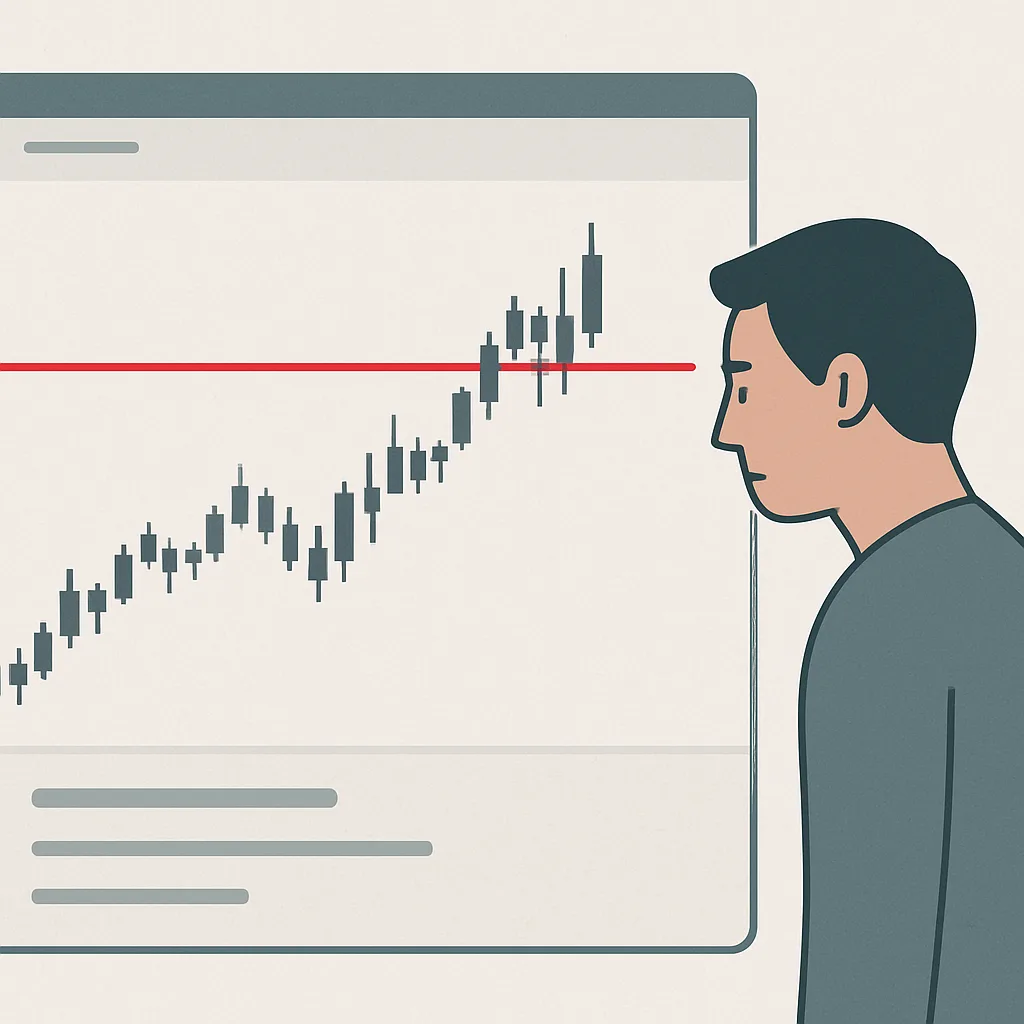
In leveraged futures trading, liquidation is the exchange’s forced closure of a position when the margin supporting it is no longer sufficient under the platform’s rules. It is designed to limit the risk that a losing position’s losses exceed the available collateral. Liquidation can happen quickly in a volatile market, and traders may lose some or all of the margin assigned to the position.
How leverage makes a position vulnerable
Leverage lets a trader control a larger futures position with a smaller amount of collateral, called margin. For example, with 10x leverage, 100 USDT of initial margin can support a position worth about 1,000 USDT, before fees and other requirements. This magnifies gains and losses relative to the margin: a relatively small adverse price move can consume a substantial share of the collateral.
Leverage does not make the market move differently. It changes how much exposure a trader takes compared with the funds backing that exposure.
What leads to liquidation
An exchange typically monitors a position’s margin against a maintenance margin requirement, the minimum amount of equity needed to keep the position open. If losses reduce the position’s equity to the required level, the exchange may begin liquidation. The exact calculation and process differ between platforms and contracts.
Liquidation risk can rise when:
- The market moves against the position.
- The position uses high leverage or has little margin relative to its size.
- Funding payments, trading fees, or other costs reduce available equity.
- Rapid price changes or thin liquidity make it harder to close at an expected price.
Liquidation price is an estimate, not a safety line
Many futures interfaces display an estimated liquidation price. It is a useful warning, but it is not a guaranteed exit price. The estimate may change as margin, fees, funding, position size, or account conditions change. Exchanges may also use a mark price, rather than the latest traded price, to assess liquidation. Check the platform’s contract rules to understand which price reference applies.
If a position is liquidated, the exchange may close all or part of it according to its procedures. The final result can be affected by execution prices and liquidation fees. Do not assume that a stop order will always prevent liquidation: it may not trigger, may execute at a worse price, or may be configured incorrectly.
Example: a small move can have a large effect
Suppose a trader opens a 1,000 USDT position using 100 USDT of initial margin. If the market moves against the position, the loss is calculated on the position exposure, not just on the 100 USDT margin. A 5% adverse move represents roughly 50 USDT of loss before fees and funding, which would consume half the initial margin. The actual liquidation point depends on maintenance margin, the contract, and exchange rules; this illustration is not a liquidation-price formula.
Ways to manage liquidation risk
- Use lower leverage and avoid taking a position larger than your risk plan allows.
- Keep track of margin, maintenance requirements, funding, and estimated liquidation price.
- Decide in advance where you would exit if the trade thesis is wrong, and understand the limits of stop orders.
- Leave room for volatility and execution costs instead of placing a stop close to the estimated liquidation level.
- Use only funds you can afford to lose; futures trading can result in rapid losses.
Adding margin may move the estimated liquidation price farther away, but it also exposes more funds to the position. It does not remove the risk of loss. Liquidation is a risk-control mechanism, not a trading strategy or a guarantee that losses will be limited to a particular amount. Review the exchange’s current documentation before trading, since rules and calculations can vary and change over time.