
When Meme Coin Frenzy Peaks, Which Risk Controls Hold?
Meme coin rallies can accelerate and reverse in hours. Learn how to recognize hype-cycle stages and set practical limits before volatility takes over.
Meme coins can move from obscure to widely discussed in a short time. Social posts, influencer attention, exchange listings, and fast-moving communities can draw in buyers and push prices sharply higher. The same attention can fade just as quickly, leaving thin liquidity and abrupt losses behind.
There is no reliable way to predict exactly when a hype cycle will peak. Traders can, however, prepare for changing conditions by defining their exposure, entry plan, and exit rules before a position is open.
How a meme coin hype cycle can unfold
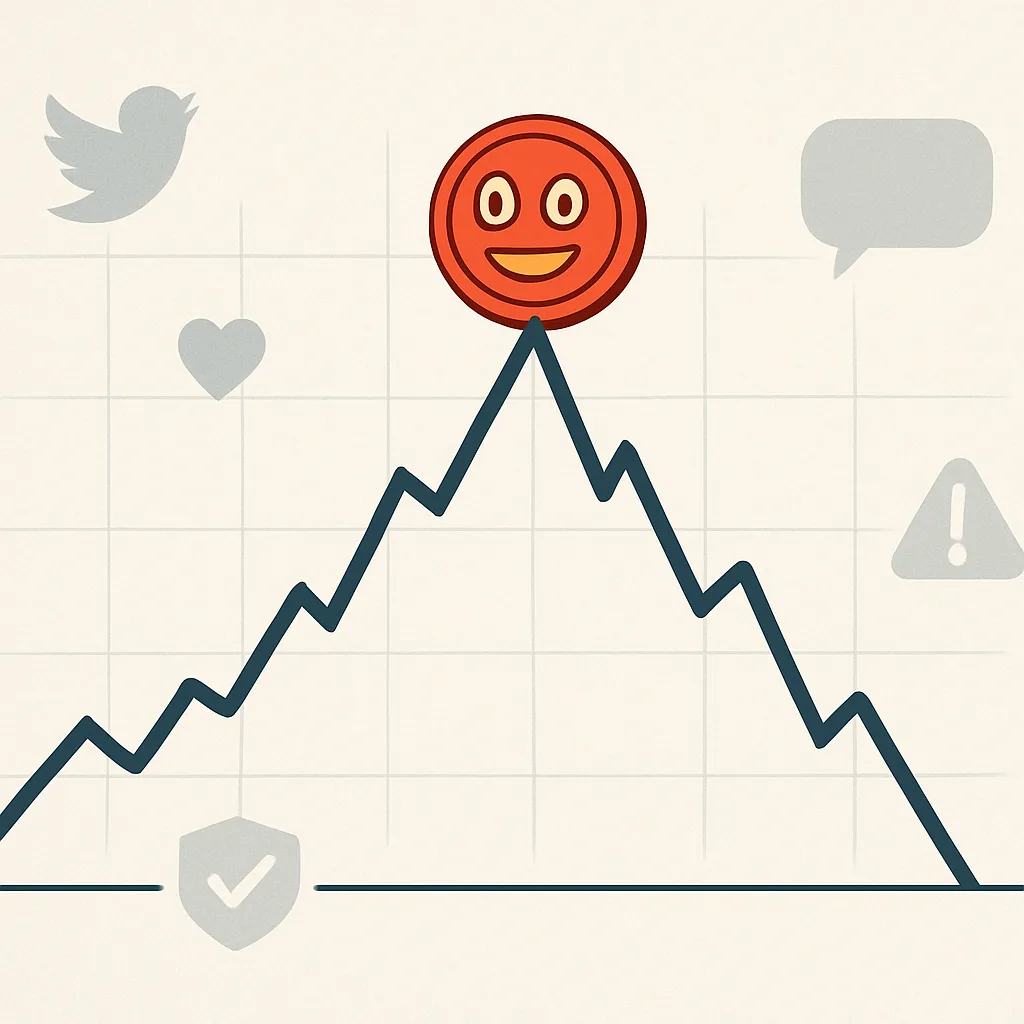
Many meme coin cycles begin with a catalyst: a viral post, a new community, a token launch, or a listing announcement. Early attention may attract more buyers, and rising prices can make the story appear stronger than the available evidence. At this stage, online engagement is not proof of durable demand or project quality.
As visibility grows, trading activity may surge. Volatility can increase, spreads may widen, and price movement may become more sensitive to large orders. Later, attention can shift to another token or the original catalyst can lose relevance. If buyers retreat, sellers may find that available liquidity is limited.
These stages are not a fixed sequence. A token can stall early, rally again after a lull, or drop without a clear warning. Treat a hype-cycle framework as a way to think about changing risks, not as a forecast.
Set limits before you buy
Decide how much you can afford to lose on a trade before entering it. Meme coins are speculative assets, and a position should not rely on money needed for essential expenses or near-term goals. Consider limiting the size of any single trade and the combined share of your portfolio allocated to highly volatile tokens.
A stop order can help define an exit point, but it does not guarantee a specific execution price. During rapid moves or low-liquidity periods, an order may fill at a different price than expected—or may not execute as intended, depending on the order type and market conditions. Understand the order options available on your platform and the risks each carries.
Also decide in advance whether you will take partial profits, close the position at a set loss, or leave the trade if the original reason for entering no longer applies. Rules are useful only if they are realistic and followed consistently.
Check liquidity and trading conditions
A quoted price does not always reflect the price at which you can trade a meaningful amount. Review the order book, recent trading activity, and the spread between buy and sell prices. A shallow order book can make it harder to enter or exit without moving the market against yourself.
Be cautious around sudden volume spikes, new listings, and promotional announcements. These events can bring more activity, but they can also amplify slippage and short-lived price swings. Avoid assuming that a token will remain easy to sell just because it is currently trending.
Separate evidence from online excitement
Social media can help explain why a token is attracting attention, but posts and follower counts are not substitutes for independent checks. Look for clear information about the token, its supply and distribution, contract details, and the venues where it trades. Verify announcements through reliable sources where possible, and be alert to impersonation, misleading claims, and coordinated promotion.
Do not let fear of missing out replace a trade plan. If a token has already made a sharp move, ask whether the remaining upside justifies the potential loss, and whether liquidity is adequate for your intended position. Choosing not to trade is also a valid decision.
Review the plan, not just the price
Keep a brief record of why you entered, how much you risked, and what conditions would change your view. Review outcomes to identify whether you followed your limits, rather than judging the quality of a decision solely by whether the trade made money.
Meme coin hype cycles are difficult to time, and disciplined controls cannot remove market risk. Position sizing, liquidity checks, preplanned exits, and skepticism toward online claims can help keep one volatile trade from dictating your broader financial decisions.